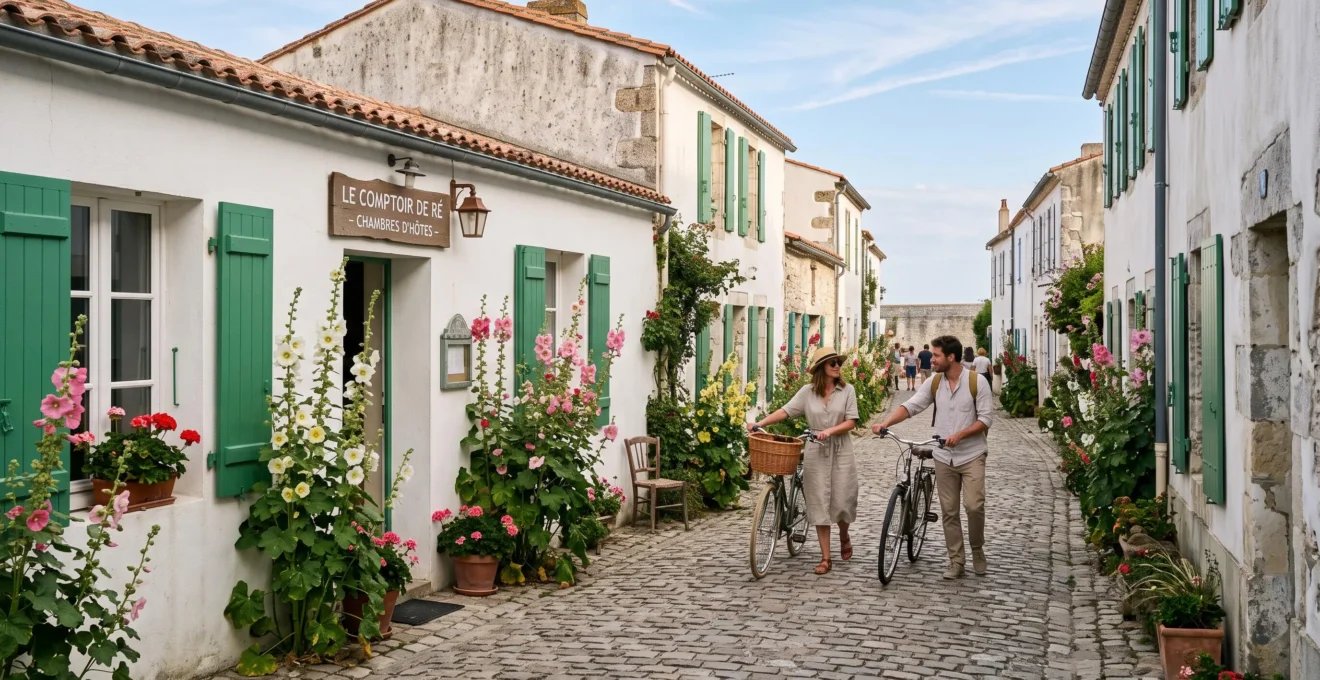
Direct answer: If you’re wondering where to stay on Île de Ré, start by matching the area to your travel style: lively harbour villages (more dining and evening atmosphere), beach-side sectors (easy swim-and-sand days), or quieter inland/residential pockets (more calm, often better value). Your budget and the season you book for will usually decide how “central” you can be without overpaying.
Île de Ré is small enough to explore across a week, but where you sleep still shapes your holiday: bike rides vs beach days, peaceful evenings vs a buzz around the port, and how easy it feels to pop out for a market or dinner.
The guide below compares the main villages and areas, then gives you a practical “matchmaking” grid by traveller profile and budget—so you can book with less uncertainty, especially in summer.
A quick way to choose your base on Île de Ré
- Want atmosphere and restaurants? Look first at harbour-focused villages such as Saint-Martin-de-Ré or La Flotte.
- Want straightforward logistics? Rivedoux-Plage is right by the bridge and can suit shorter stays.
- Want calm nights and easy cycling? Consider quieter residential sectors and double-check how close you are to cycle paths and your preferred beach.
- Travelling in peak summer? Prioritise location first (beach/port/parking), then compromise on size or style if needed.
What Makes Each Area of Île de Ré Different?
A useful way to compare places to stay on Île de Ré is to look at three overlapping priorities: harbour and village-centre access for restaurants, cafés and markets; beach access for swimming and seaside walks; and quieter residential settings for a more peaceful stay. These categories are not mutually exclusive, and the experience can vary considerably within the same village. Choose according to your main activities, then check the property’s exact location before booking.
Geographically, the bridge brings you onto the island at Rivedoux-Plage, making it a practical base if you want to minimise driving time on arrival or you’re planning a shorter break. Further along, villages with well-known harbours tend to feel more animated, especially in the evenings.
According to Destination Île de Ré, Rivedoux-Plage is located at the island’s entrance, La Flotte is known for its harbour and market, and Saint-Martin-de-Ré stands out for its UNESCO-listed fortifications and historic town centre. These differences can help you narrow down your options, although the best location also depends on the exact address of your accommodation. See the official guide to the villages of Île de Ré.
In practice, that means your trade-off often looks like this: stay by a port if you want to walk out to terraces and dinners, or stay in a calmer sector if you’re focused on cycling, reading, and early beach mornings without noise nearby.
To help you compare at a glance, here is a quick decision table based on the three most common “base” styles travellers choose.
| What matters to you | Harbour villages (port/centre) | Beach-side or quieter residential pockets |
|---|---|---|
| Evening atmosphere | More restaurants, terraces, people around | Quieter nights; you may need to cycle/drive for dinner |
| Day-to-day convenience | Easy strolls to market, shops, harbour walks | Easier “beach routine”; convenience depends on exact address |
| Best for | Couples who want a lively base, short stays, travellers who like to walk everywhere | Families and cyclists who want calm, space, and quick access to cycle paths and beaches |
Location can vary within the same village: two rentals in the “same” commune can feel completely different depending on whether you’re right by the port, set back in residential lanes, or closer to the beach access.
Which Village Should You Choose Based on Your Travel Profile?
The most reliable way to choose where to stay on Île de Ré is to start with your traveller profile, then apply a budget reality-check. Below, each profile is linked to a “best-fit” type of area—and what to verify before booking.
If you’re travelling as a family, what tends to work best?
Families may find calmer residential areas convenient if they offer straightforward access to a beach and cycle paths without requiring frequent trips through busy streets. Consider your children’s ages, the distance you are comfortable walking or cycling, and how easily you can reach shops and restaurants. These practical details often matter more than the village name alone.
In practical terms, focus your search on residential pockets and beach-adjacent areas, then check walking/cycling time to the nearest beach access and whether you can safely store bikes. If you want a bit of life without staying in the busiest centre, look for accommodation slightly back from harbour fronts rather than directly on them.

If you’re a couple, where is best for a quiet getaway?
If you want a quiet couples’ getaway, look for accommodation on a residential street or slightly away from the busiest harbour quays. If you prefer restaurants and evening activity, staying closer to a village centre may suit you better. In either case, check the immediate surroundings and the walking or cycling route to the places you want to visit.
If you’re choosing between two similar options, use a simple tie-breaker: pick the one that lets you walk or cycle to a pleasant evening spot (a harbour, a market area, or a scenic loop) without needing the car.
If you’re coming mainly to cycle, which base is most practical?
Île de Ré is strongly associated with cycling holidays, so your best base is usually the one that makes riding feel effortless: quick access to cycle routes, easy bike storage, and less time navigating traffic-heavy centres with a loaded bike.
That doesn’t automatically mean “remote”. It means choosing an address that’s convenient for the rides you’ll actually do (beaches, salt marsh landscapes, harbour loops). Before you book, check whether your accommodation offers secure storage or whether you’ll be carrying bikes through narrow hallways or up stairs.
- You want restaurants and evening buzz:
Prioritise harbour villages (for example Saint-Martin-de-Ré or La Flotte). Expect higher demand in peak periods, so book earlier if location is your top priority.
- You want beach-first days with kids:
Choose beach-adjacent or calmer residential sectors and verify your nearest beach access and bike storage before confirming.
- You want a short break with easy arrival:
Consider staying near the island entrance at Rivedoux-Plage to simplify arrival and departure logistics.
How Much Should You Expect to Pay by Area?
There is no single price range that applies to every village on Île de Ré. Accommodation costs depend on the dates, property type, size, amenities and distance from popular attractions. Harbour-front properties and highly walkable centres may attract strong demand, but compare current listings for your dates before assuming that one area will be more expensive than another.
To keep your comparison fair, always compare like-for-like: same travel dates, similar distance to the beach/port, and similar size. A small flat right on a harbour can be priced very differently from a larger place a few streets back, even within the same village.

What can affect the price includes proximity to a harbour, restaurants, markets and beach access, as well as the property’s size, amenities and booking dates. If you want to manage your budget, compare similar properties in central and residential locations, including the time and transport needed to reach the places you plan to visit. A less central address may offer better value, but this should be checked against actual listings for your dates.
If you’re open to different accommodation types, compare hotels, holiday rentals, campsites and other options using the same dates and a similar level of comfort. Check what each total includes, such as cleaning fees, parking, linen or bike storage, and compare the travel time to the places you plan to visit. This gives you a more useful picture of value than relying on broad tourism figures for the wider Charente-Maritime department.
One more angle that can matter, especially if you’re comparing whole-house rentals, is how seasonal demand affects owners’ strategies and availability. If you’re curious about the owner side of seasonal rentals, you can read this internal guide on seasonal rental benefits.
Budget tip that works in any village: if two options look similar on a map, check the exact walking/cycling route to the beach or port. A “close” pin can still mean a long detour to a safe access point.
When Is the Best Time to Book Your Stay?
On Île de Ré, the best time to book depends largely on your travel dates and how flexible you can be. If you need accommodation during school holidays or a particular summer week, start comparing options early to preserve your choice of location and property type. If your dates are flexible, compare availability and total prices across several periods before deciding.
What we can document is that tourism demand is substantial at the department and island level. For example, INSEE’s 2025 figures show high volumes of overnight stays in Charente-Maritime across hotels and campsites, which helps explain why the most convenient locations get snapped up when demand concentrates.
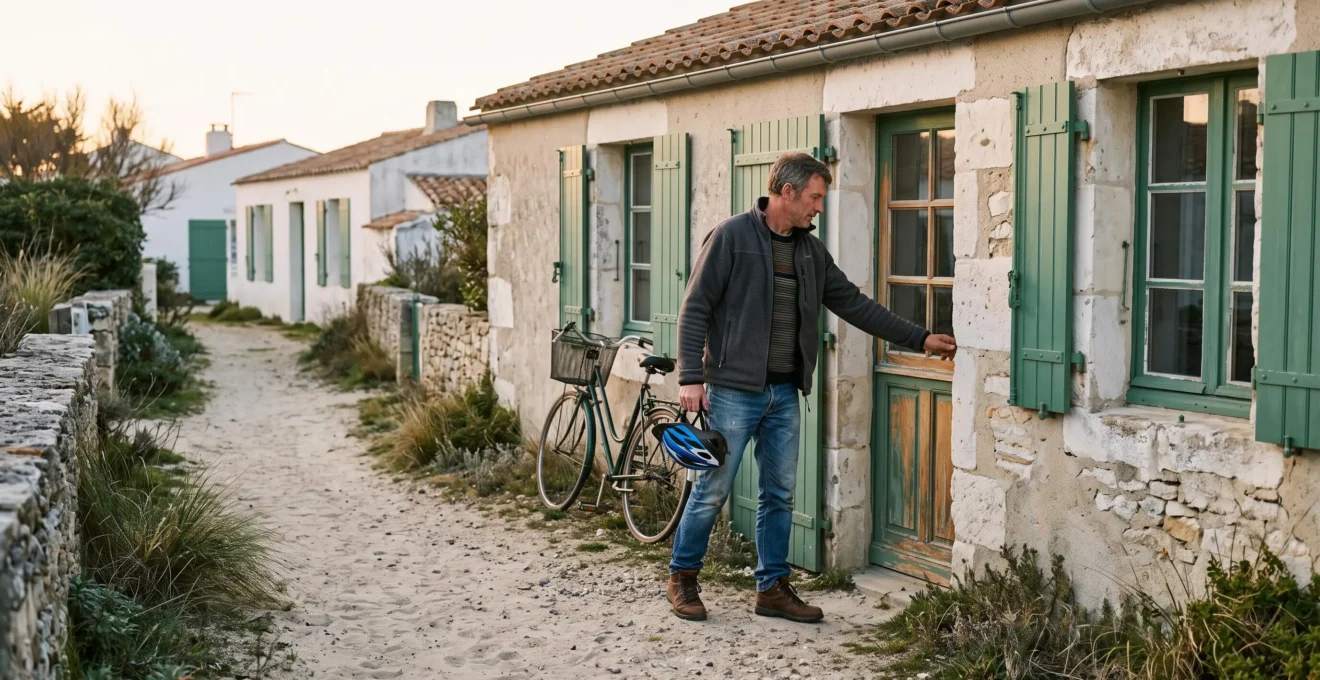
Local reporting that relays figures communicated by Charentes Tourisme and Destination Île de Ré suggests that, despite shifts in occupancy rates over time, the number of nights booked in rentals can still be high in-season—meaning popular properties can disappear early for the weeks everyone wants (Ré à la Hune, 2024). This isn’t a guarantee of “sold out” conditions, but it supports a cautious approach if you have little flexibility.
If you’re travelling in summer school-holiday weeks: treat “I’ll book later” as a risk to your location choice. You may still find accommodation, but you could end up compromising on area, parking, or beach access.
How to Finalise Your Choice and Book Smart
Once you’ve shortlisted a couple of villages or areas, the final step is to verify the details that change your day-to-day experience. This is where many disappointments happen: the village is right, but the address is awkward for the beach you want, or the “quiet” listing sits next to a late-night terrace street.
- Pick your priority atmosphere
Decide what matters most: harbour life (dinners and strolling), beach routine (quick sand access), or calm nights (residential lanes).
- Set a budget “guardrail” for location
Choose one non-negotiable (for example: walkable to port, or within an easy cycle to a specific beach). This keeps you from paying extra for features you won’t use.
- Check the exact micro-location
Look beyond the village name: distance to beach access points, proximity to terraces, and how you’ll move at busy times (on foot, bike, or car).
- Validate the practicalities
Bike storage, parking, and whether the layout suits your group (especially with children or multiple bikes).
- Book earlier when dates are fixed
If you’re locked into peak weeks, prioritise availability and location first; if you’re flexible, compare more options to balance price and comfort.
If you’re still torn between two areas, use this tie-breaker: choose the one that reduces daily friction. On Île de Ré, that usually means less time getting to the beach, fewer worries about bike storage, and the option to enjoy an evening out without driving. For more practical ideas, read this article to ways to reduce your holiday costs.
Which village should we pick for a family holiday near the beach?
For many families, the best fit is a calmer, beach-adjacent sector where you can reach a beach access point and cycle paths easily, then cycle into a harbour village for markets or dinner. Instead of choosing only by village name, check the exact route to the beach and whether you can store bikes safely.
Where to stay on Île de Ré on a budget during high season?
To control costs in peak weeks, consider staying a little back from the harbour front or in quieter residential pockets rather than the most walkable waterfront addresses. Keep your comparison fair (same dates, similar size, similar access to beach/port) and prioritise one location must-have so you don’t pay extra for features you won’t use.
Which area of Île de Ré is quietest for a couples’ getaway?
For a quieter couples’ stay, look for accommodation in residential lanes or slightly outside the busiest harbour quays, while still being within an easy cycle of a village centre for dinner. Quietness is often more about the street and immediate surroundings than the commune itself.
How far in advance should we book for the summer season?
The more fixed your dates are (especially school-holiday weeks), the earlier you should book to protect your choice of area and practical features like parking or bike storage. The provided sources don’t give a precise “X months” rule, so treat early booking as a way to reduce risk rather than a guaranteed saving.
If you take one thing away, let it be this: the “best” place to stay is the one that matches your traveller profile (family, couple, cyclists), your budget, and the season you’re booking for. Decide your non-negotiable (port life, beach access, or calm), then choose the address that makes that easy every day.