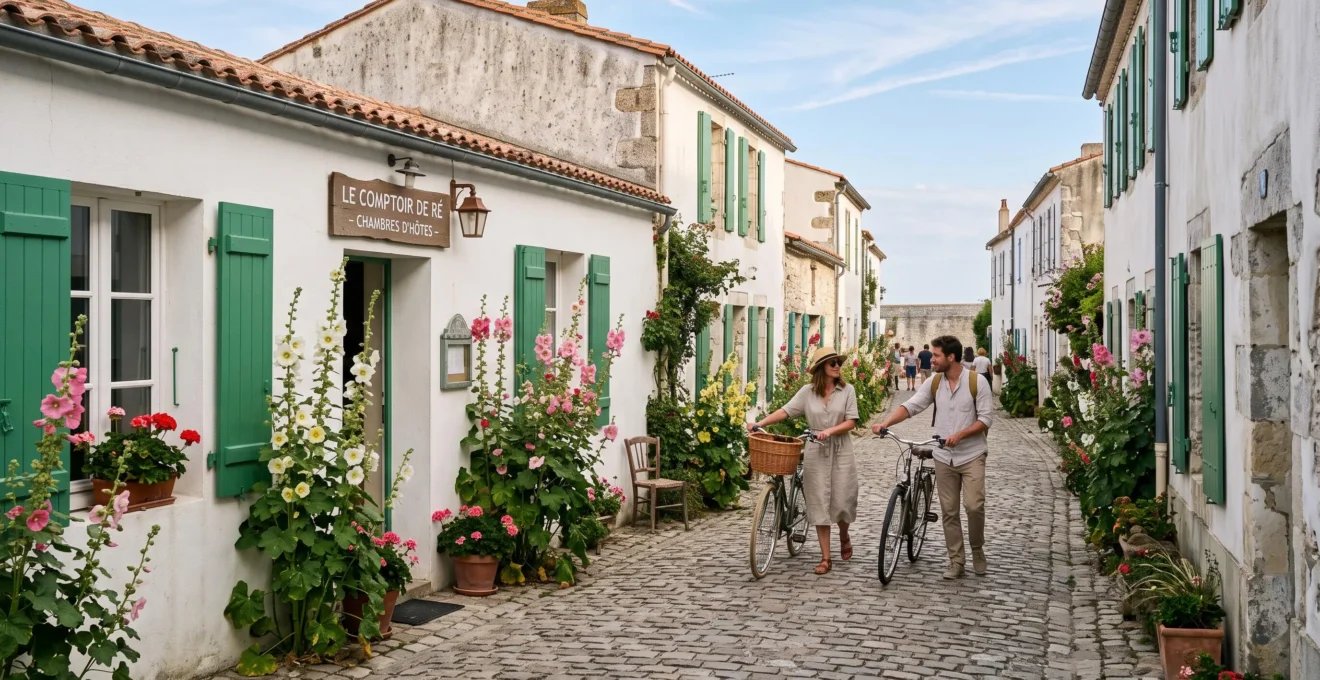
Direct answer: If you’re wondering where to stay on Île de Ré, start by matching the area to your travel style: lively harbour villages (more dining and evening atmosphere), beach-side sectors (easy swim-and-sand days), or quieter inland/residential pockets (more calm, often better value). Your budget and the season you book for will usually decide how “central” you can be without overpaying.
Île de Ré is small enough to explore across a week, but where you sleep still shapes your holiday: bike rides vs beach days, peaceful evenings vs a buzz around the port, and how easy it feels to pop out for a market or dinner.
The guide below compares the main villages and areas, then gives you a practical “matchmaking” grid by traveller profile and budget—so you can book with less uncertainty, especially in summer.
A quick way to choose your base on Île de Ré
- Want atmosphere and restaurants? Look first at harbour-focused villages such as Saint-Martin-de-Ré or La Flotte.
- Want straightforward logistics? Rivedoux-Plage is right by the bridge and can suit shorter stays.
- Want calm nights and easy cycling? Consider quieter residential sectors and double-check how close you are to cycle paths and your preferred beach.
- Travelling in peak summer? Prioritise location first (beach/port/parking), then compromise on size or style if needed.
What Makes Each Area of Île de Ré Different?
The simplest way to compare Île de Ré is to think in three “holiday atmospheres”: harbour villages (ports, cafés, markets), beach-facing zones (quick access to sand and water), and quieter inland or residential pockets (more peace, often more space). The best choice depends on what you’ll do most days—and what you want your evenings to feel like.
Geographically, the bridge brings you onto the island at Rivedoux-Plage, making it a practical base if you want to minimise driving time on arrival or you’re planning a shorter break. Further along, villages with well-known harbours tend to feel more animated, especially in the evenings.
D’après l’Office de Tourisme de l’Île de Ré, Rivedoux-Plage sits at the entrance to the island, La Flotte is known for its port and daily market, and Saint-Martin-de-Ré stands out for its UNESCO-listed heritage and a more “town-like” vibe (présentation officielle des villages de Ré).
In practice, that means your trade-off often looks like this: stay by a port if you want to walk out to terraces and dinners, or stay in a calmer sector if you’re focused on cycling, reading, and early beach mornings without noise nearby.
To help you compare at a glance, here is a quick decision table based on the three most common “base” styles travellers choose.
| What matters to you | Harbour villages (port/centre) | Beach-side or quieter residential pockets |
|---|---|---|
| Evening atmosphere | More restaurants, terraces, people around | Quieter nights; you may need to cycle/drive for dinner |
| Day-to-day convenience | Easy strolls to market, shops, harbour walks | Easier “beach routine”; convenience depends on exact address |
| Best for | Couples who want a lively base, short stays, travellers who like to walk everywhere | Families and cyclists who want calm, space, and quick access to cycle paths and beaches |
Location can vary within the same village: two rentals in the “same” commune can feel completely different depending on whether you’re right by the port, set back in residential lanes, or closer to the beach access.
Which Village Should You Choose Based on Your Travel Profile?
The most reliable way to choose where to stay on Île de Ré is to start with your traveller profile, then apply a budget reality-check. Below, each profile is linked to a “best-fit” type of area—and what to verify before booking.
If you’re travelling as a family, what tends to work best?
Families usually do best in calmer sectors where you can get to a beach access point and onto cycle paths without crossing busy central streets. The goal is simple: easier logistics (beach bags, snacks, nap schedules) and quieter evenings.
In practical terms, focus your search on residential pockets and beach-adjacent areas, then check walking/cycling time to the nearest beach access and whether you can safely store bikes. If you want a bit of life without staying in the busiest centre, look for accommodation slightly back from harbour fronts rather than directly on them.

If you’re a couple, where is best for a quiet getaway?
If your priority is charm and calm (rather than nightlife), you’ll often prefer picturesque villages with a “real village” feel and accommodation set slightly away from the busiest harbour quays. You can still cycle in for dinner, but you won’t feel like you’re sleeping on the main promenade.
If you’re choosing between two similar options, use a simple tie-breaker: pick the one that lets you walk or cycle to a pleasant evening spot (a harbour, a market area, or a scenic loop) without needing the car.
If you’re coming mainly to cycle, which base is most practical?
Île de Ré is strongly associated with cycling holidays, so your best base is usually the one that makes riding feel effortless: quick access to cycle routes, easy bike storage, and less time navigating traffic-heavy centres with a loaded bike.
That doesn’t automatically mean “remote”. It means choosing an address that’s convenient for the rides you’ll actually do (beaches, salt marsh landscapes, harbour loops). Before you book, check whether your accommodation offers secure storage or whether you’ll be carrying bikes through narrow hallways or up stairs.
- You want restaurants and evening buzz:
Prioritise harbour villages (for example Saint-Martin-de-Ré or La Flotte). Expect higher demand in peak periods, so book earlier if location is your top priority.
- You want beach-first days with kids:
Choose beach-adjacent or calmer residential sectors and verify your nearest beach access and bike storage before confirming.
- You want a short break with easy arrival:
Consider staying near the island entrance at Rivedoux-Plage to simplify arrival and departure logistics.
How Much Should You Expect to Pay by Area?
There isn’t a single “price list” for Île de Ré by village that can be quoted reliably without current market data from a defined source—and the SOURCE_PACK provided doesn’t include official, recent euro price ranges by zone. What you can usefully rely on is the price hierarchy driven by demand: harbour-front and highly walkable centres tend to be more sought-after, while quieter sectors can feel better value for space.
To keep your comparison fair, always compare like-for-like: same travel dates, similar distance to the beach/port, and similar size. A small flat right on a harbour can be priced very differently from a larger place a few streets back, even within the same village.

What usually pushes the price up is being able to do everything on foot (port, dining, market) or having genuinely quick beach access. What usually helps your budget is accepting a short cycle ride to the port or choosing a quieter lane rather than a prime waterfront location.
If you’re open to different accommodation types, camping and other collective accommodation can change the budget equation. As a sign of how significant camping is in the wider area, the INSEE reports that Charente-Maritime recorded about 8.5 million camping overnight stays (April–September) and about 2.2 million hotel overnight stays in 2025 (department-level data, not Île de Ré only) (statistiques officielles fréquentation Charente-Maritime).
One more angle that can matter, especially if you’re comparing whole-house rentals, is how seasonal demand affects owners’ strategies and availability. If you’re curious about the owner side of seasonal rentals, you can read this internal guide on seasonal rental benefits.
Budget tip that works in any village: if two options look similar on a map, check the exact walking/cycling route to the beach or port. A “close” pin can still mean a long detour to a safe access point.
When Is the Best Time to Book Your Stay?
On Île de Ré, the booking “sweet spot” mostly depends on whether you’re travelling in peak summer or outside it. The SOURCE_PACK does not provide an official island calendar of peak dates, so the most credible guidance is principle-based: the more fixed your dates (school holidays, specific weeks), the earlier you should book to protect both availability and choice of location.
What we can document is that tourism demand is substantial at the department and island level. For example, INSEE’s 2025 figures show high volumes of overnight stays in Charente-Maritime across hotels and campsites, which helps explain why the most convenient locations get snapped up when demand concentrates.
Local reporting that relays figures communicated by Charentes Tourisme and Destination Île de Ré suggests that, despite shifts in occupancy rates over time, the number of nights booked in rentals can still be high in-season—meaning popular properties can disappear early for the weeks everyone wants (Ré à la Hune, 2024). This isn’t a guarantee of “sold out” conditions, but it supports a cautious approach if you have little flexibility.
If you’re travelling in summer school-holiday weeks: treat “I’ll book later” as a risk to your location choice. You may still find accommodation, but you could end up compromising on area, parking, or beach access.
How to Finalise Your Choice and Book Smart
Once you’ve shortlisted a couple of villages or areas, the final step is to verify the details that change your day-to-day experience. This is where many disappointments happen: the village is right, but the address is awkward for the beach you want, or the “quiet” listing sits next to a late-night terrace street.
- Pick your priority atmosphere
Decide what matters most: harbour life (dinners and strolling), beach routine (quick sand access), or calm nights (residential lanes).
- Set a budget “guardrail” for location
Choose one non-negotiable (for example: walkable to port, or within an easy cycle to a specific beach). This keeps you from paying extra for features you won’t use.
- Check the exact micro-location
Look beyond the village name: distance to beach access points, proximity to terraces, and how you’ll move at busy times (on foot, bike, or car).
- Validate the practicalities
Bike storage, parking, and whether the layout suits your group (especially with children or multiple bikes).
- Book earlier when dates are fixed
If you’re locked into peak weeks, prioritise availability and location first; if you’re flexible, compare more options to balance price and comfort.
If you’re still torn between two areas, use this tie-breaker: choose the one that reduces daily friction. On Île de Ré, that usually means fewer “logistics” moments—less time getting to the beach, fewer worries about bikes, and an evening plan you can do without driving.
Which village should we pick for a family holiday near the beach?
For many families, the best fit is a calmer, beach-adjacent sector where you can reach a beach access point and cycle paths easily, then cycle into a harbour village for markets or dinner. Instead of choosing only by village name, check the exact route to the beach and whether you can store bikes safely.
Where to stay on Île de Ré on a budget during high season?
To control costs in peak weeks, consider staying a little back from the harbour front or in quieter residential pockets rather than the most walkable waterfront addresses. Keep your comparison fair (same dates, similar size, similar access to beach/port) and prioritise one location must-have so you don’t pay extra for features you won’t use.
Which area of Île de Ré is quietest for a couples’ getaway?
For a quieter couples’ stay, look for accommodation in residential lanes or slightly outside the busiest harbour quays, while still being within an easy cycle of a village centre for dinner. Quietness is often more about the street and immediate surroundings than the commune itself.
How far in advance should we book for the summer season?
The more fixed your dates are (especially school-holiday weeks), the earlier you should book to protect your choice of area and practical features like parking or bike storage. The provided sources don’t give a precise “X months” rule, so treat early booking as a way to reduce risk rather than a guaranteed saving.
If you take one thing away, let it be this: the “best” place to stay is the one that matches your traveller profile (family, couple, cyclists), your budget, and the season you’re booking for. Decide your non-negotiable (port life, beach access, or calm), then choose the address that makes that easy every day.